



Unlocking the Potential of Targeted Protein Degradation
In the realm of novel therapeutics, targeted protein degradation has serendipitously emerged as a game-changer, transforming “undruggable” proteins into viable candidates for therapeutic intervention. By hijacking the cell’s innate ubiquitin-proteasome system (UPS), technologies like Proteolysis Targeting Chimeras (PROTACs) and molecular glues enable the precise tagging and destruction of elusive disease-causing proteins, offering a paradigm shift from mere inhibition to outright elimination. Previously undruggable targets lacking traditional binding pockets can be tagged and dragged for cellular shredding.
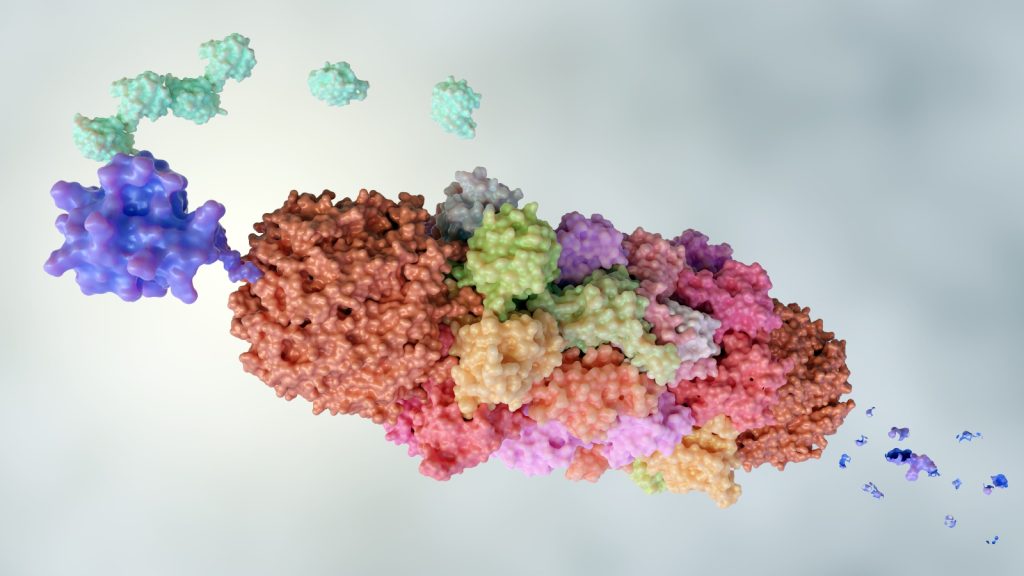
Currently, more than 40 PROTACs are in clinical trials, with the first approvals anticipated this year. The global targeted protein degradation (TPD) market was valued at $544.4 million in 2024, and is projected to surge to $1.6 billion by 2030, driven by its potential in oncology, neurodegeneration, immunology, inflammation and other therapeutic areas. Yet, despite this momentum, a critical bottleneck persists in preclinical development between initial binding validation and final degradation efficacy. Poor solubility, limited cell permeability, and difficult oral bioavailability pose significant challenges for TPD therapeutic strategies. Overcoming issues such as off-target degradation, or ligase saturation, which can impair UPS, are also focal points for research.
From Occupancy-Driven to Event-Driven: Revolutionizing Protein Targeting
Traditional small-molecule drugs operate on an occupancy-driven model, where efficacy hinges on sustained binding to a target’s active site, often leading to incomplete inhibition and resistance in complex diseases like cancer. In contrast, event-driven modalities like PROTACs work by linking the target protein to the cell’s natural degradation machinery, marking it for degradation in the proteasome. Molecular glues are small molecules that can also trigger UPS using a mechanism which modulates protein-protein interactions in cells by enhancing their affinity and effectively “gluing” them together.
Event-driven TPD approach can be particularly beneficial, because 80-90% of the proteome is deemed undruggable by conventional means – these targets include transcription factors, hormone receptors, and scaffolding proteins often implicated in cancers and CNS disorders.
The Missing Bridge: Why Comprehensive Assays Are Essential for PROTAC Success
The journey from hit identification to candidate selection demands rigorous investigation of the entire cascade: binding, ubiquitination, and degradation.
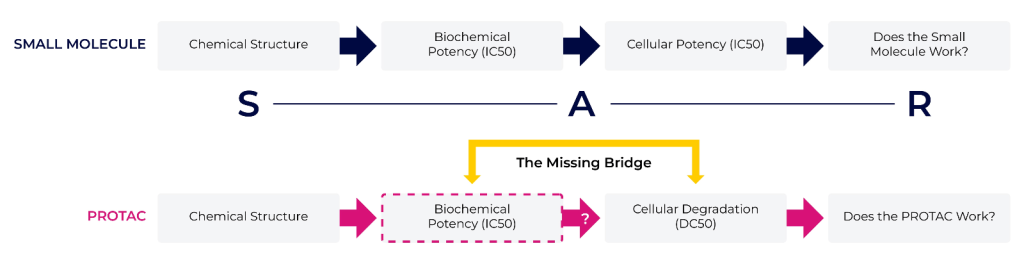
For PROTACs, SAR is far more challenging than for traditional small-molecule inhibitors, as biochemical and cellular data links remain unclear. Western blot can assess degradation efficacy, but a wide “missing bridge” gap exists between target binding and degradation. PROTACs’ complexity demands robust assays to connect these data points.
A common pitfall in PROTAC development is fragmented and incomplete development screening. Typically, scientists start by confirming if the PROTAC binds the target protein via occupancy assays like surface plasmon resonance (SPR) or fluorescence polarization, before leaping right to assess overall degradation efficacy in cells or models. This skips the foundational “bridge” of mechanistic validation: does ubiquitination occur efficiently? Is the PROTAC cell-permeable? What are the kinetics and off-target effects? Without these insights, false positives abound, as a molecule might bind but fail to induce the full UPS event, leading to suboptimal degradation or toxicity.
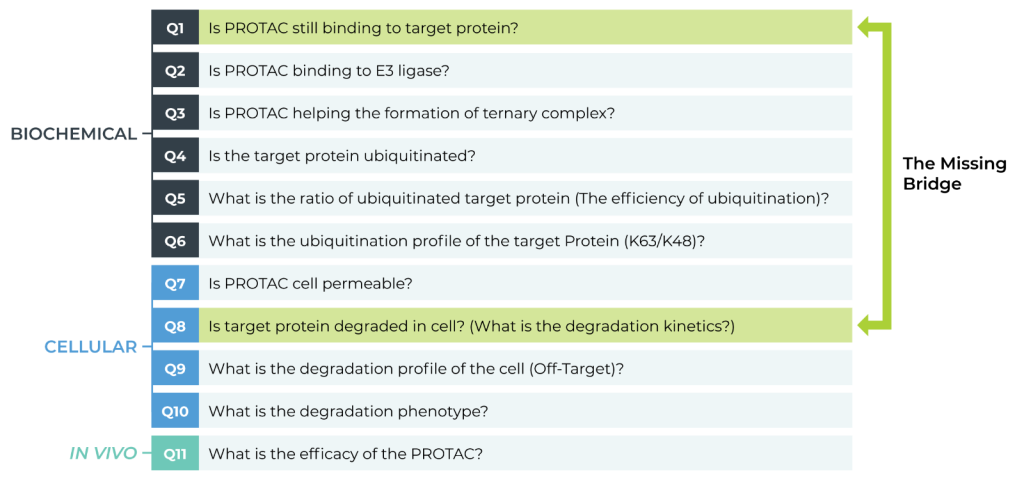
Our PROTAC evaluation platform encompasses what we have defined as the “11 Key Questions for PROTACs”. Each question addresses a key aspect of a PROTAC’s biological activity or characteristics, thereby narrowing down the challenges in PROTAC SAR research.
ChemPartner’s UPS Assay Platform fills this void by examining the 11 critical steps, bridging the usual gap, and ensuring every step of the degradation pathway is investigated. Starting with Step 1, we employ high-throughput binding assays to verify PROTAC-target engagement. Next, our foundational bridge builds upon 6 steps to verify efficient ubiquitination and cell permeability:
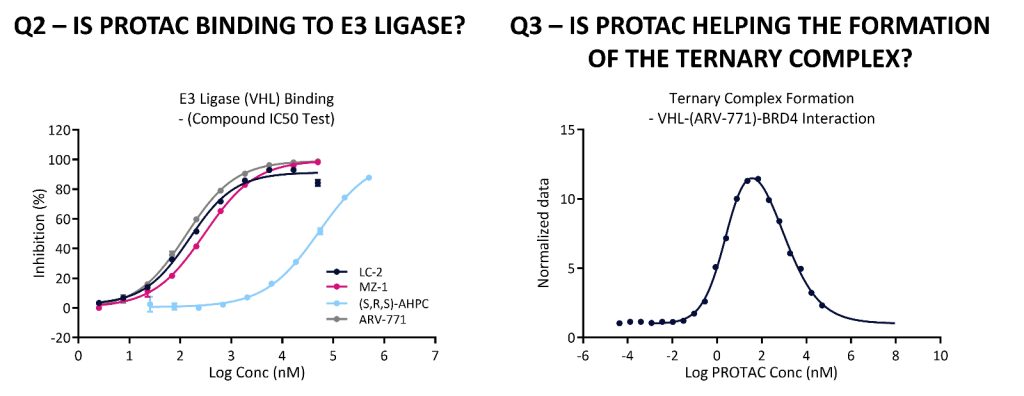
- (Q2) We confirm that PROTAC is binding to E3 ligase by binary complex formation assay, yielding Kd value and IC50 from compound inhibition test.
- (Q3) PROTAC involvement in the formation of ternary complex is assessed by our dedicated assay, which analyzes binding of the necessary elements of the complex.
Curious about additional insights into the remaining steps of our Missing Bridge for PROTACs? Request a poster for more details!
- (Q4) An enzymatic assay is then utilized to confirm whether the target protein is ubiquitinated.
- (Q5) Ubiquitination efficiency is defined using both an enzymatic assay and Western Blot analysis to establish the ratio of ubiquitinated target protein.
- (Q6) An enzymatic assay is utilized to identify the linkage type and the specific lysine residue on the target protein involved in forming the chain, thereby defining the ubiquitination profile of target protein.
- (Q7) The final key question – whether the PROTAC is cell permeable – is answered using cell uptake assay and NanoBRET assay to confirm target engagement.
The next 3 steps of the assay platform, seek to confirm that the target protein is being degraded in the cell, which includes assays investigating target degradation kinetics. This step uses multiple methods, including Western Blot, HiBiT assay, and cell-based ELISA & HTRF. In addition, we establish the cellular degradation profile, trying to pinpoint any possible off-target degradation, using quantitative proteomic analysis. We conclude our cellular investigation by multi-panel analysis that includes cell growth, cytotoxicity, apoptosis analysis, cell cycle analysis, protein phosphorylation and reporter gene assay.
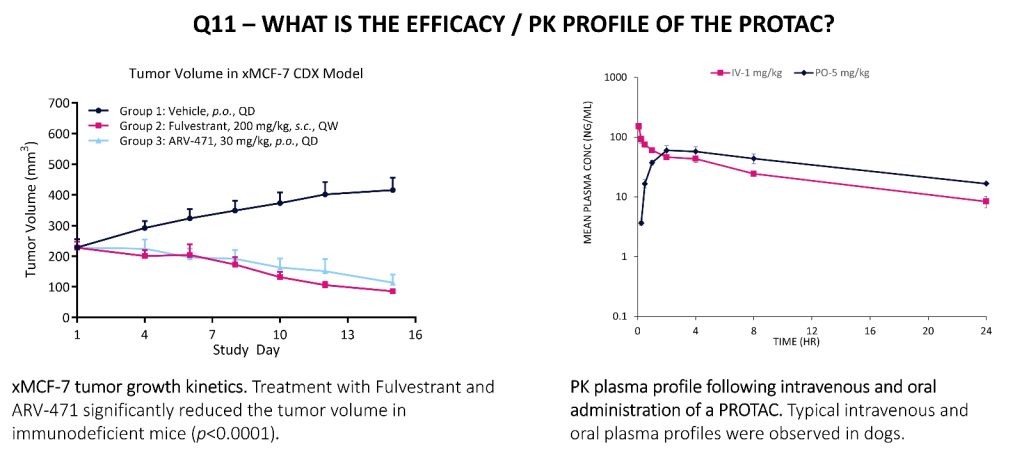
Finally, we move to in vivo efficacy and pharmacology / pharmacokinetics to test the modality in animals.
Curious about additional insights into the remaining steps of our Missing Bridge for PROTACs? Request a poster for more details!
This end-to-end approach has proven invaluable, for instance it has prevented incomplete ubiquitination profiling, which can mask liabilities down the line. By bridging these gaps, ChemPartner can de-risks your pipeline, turning potential PROTACs into robust candidates.
Forging the Future of TPD: Partner with ChemPartner
With PROTACs poised to redefine cancer therapy and molecular glues expanding into CNS indications, comprehensive preclinical platforms like ChemPartner’s UPS Assay Platform are indispensable for bridging innovation to impact. Our event-driven assays not only validate mechanisms but also optimize leads for clinical success, addressing the undruggable targets that traditional drugs can’t touch. Whether you’re advancing oncology degraders or exploring epigenetic glues, ChemPartner is a committed collaborator in translating targeted protein degradation concepts into clinically relevant therapeutics.
Bibliography
Grand View Research. Targeted Protein Degradation Market | Industry Report, 2030. Available at: https://www.grandviewresearch.com/industry-analysis/targeted-protein-degradation-market-report. Accessed August 25, 2025.
Zhao L, Zhao J, Zhong K, Tong A, Jia D. Targeted protein degradation: mechanisms, strategies and application. Signal Transduct Target Ther. 2022;7(1):113. Published 2022 Apr 4. doi:10.1038/s41392-022-00966-4
Brodermann MH, Henderson EK, Sellar RS. The emerging role of targeted protein degradation to treat and study cancer. J Pathol. 2024;263(4-5):403-417. doi:10.1002/path.6301