
Antibody-drug conjugates (ADCs) are complex therapeutics that link antibodies to cytotoxic payloads, offering a targeted approach to mitigate the systemic toxicity of conventional chemotherapy. Despite rapid progress in ADC engineering, significant challenges remain, related both to technical limitations and to a full understanding of complex tumor biology. When developing such intricate molecules as ADCs, we often encounter issues like poor tumor penetration, premature payload release, and localized or systemic toxicity. In the previous blog, we focused mainly on antibody engineering. This time we are homing in on the intricate engineering of the linker and payload, which are critical for ADC safety and efficacy.
Perfect Linker: Striking Balance Between Stability and Cleavability
One of the most frequently encountered challenges in ADC development is premature linker cleavage, which releases the payload in circulation or within non-cancer tissues. The great majority of currently approved ADCs (about 80%) contain a cleavable linker with a chemical trigger to induce cleavage and payload release in a designated cancer environment. However, these linkers are inherently susceptible to enzymatic cleavage by extracellular enzymes elsewhere. Popular linkers, such as Val-Cit, use different methods of release, such as proteolysis, disulfide reduction, and proteolytic degradation. These linkers work well, readily releasing cargo at the destination, but can also lead to premature systemic release, resulting in off-target toxicities.[1]
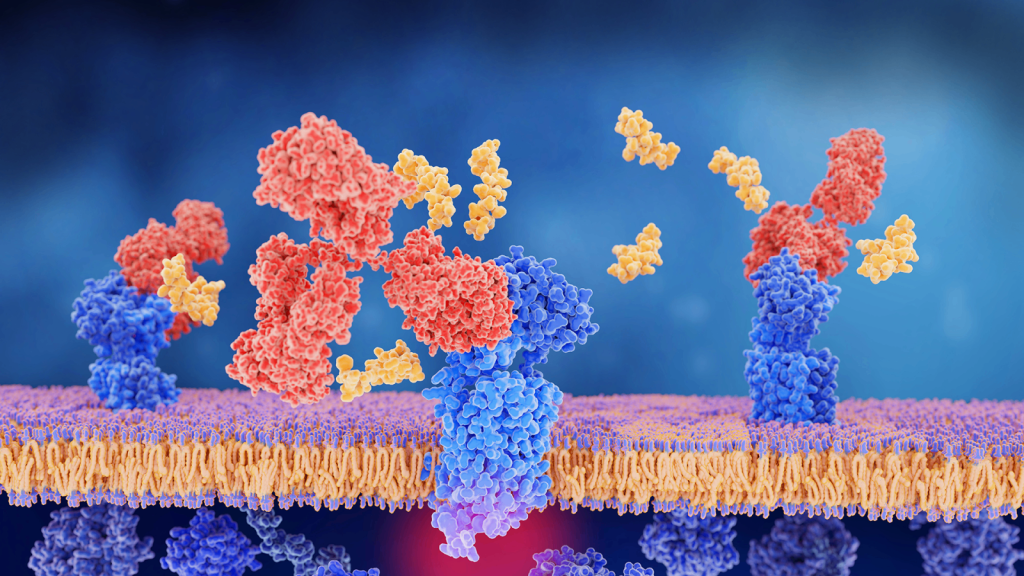
Ideally, ADCs should release payload at the tumor site or when internalized into the cancer cells. Premature payload release can decrease ADCs’ efficacy and safety.
Recently, novel approaches have been employed to enable linker activation only in specific physicochemical conditions, such as those characteristic of the tumor microenvironment. For example, Adcetris is an ADC that is activated specifically by cathepsin B, an intracellular lysosomal cysteine protease that is greatly overexpressed in breast, thyroid, and colorectal cancers. Cathepsin B, acting only intracellularly, enables selective activation of ADCs within tumor cells. Another novel linker chemistry employs a legumain linker, that leverages the overexpression of a lysosomal protease, legumain, which is found in cancer cells only. The legumain technology can also be used with prodrug constructs. For example, a so-called “cell trapper”, a hydrophilic peptide cap, can be added to the cytotoxic drug payload, which only becomes toxic when cleaved by the legumain enzyme in tumor cells. Multiple other prodrug approaches have been explored, including glucuronide-cleavable linkers, which are responsive to beta-glucuronidase, yet another lysosomal enzyme that is upregulated in cancer cells. In this case, a beta-glucuronide moiety is used to shield the dipeptides as extra protection from accidental, extracellular cleavage while the ADC is circulating in plasma.[1][2]
Bystander Effect: A Hindrance or Great Opportunity?
Another interesting aspect of linker-payload release is the bystander effect, an adverse event involving local toxicity, which results in the destruction of nearby non-cancerous cells. It is caused by the diffusion of the cytotoxic payload into adjacent healthy cells, triggering their damage. The bystander effect can be caused by the persistent activity of the cytotoxic payload, which diffuses too readily into nearby tissues. The unintended effect can also be caused by unprocessed ADCs, which are not properly metabolized due to insufficient antigen density or poor internalization kinetics.
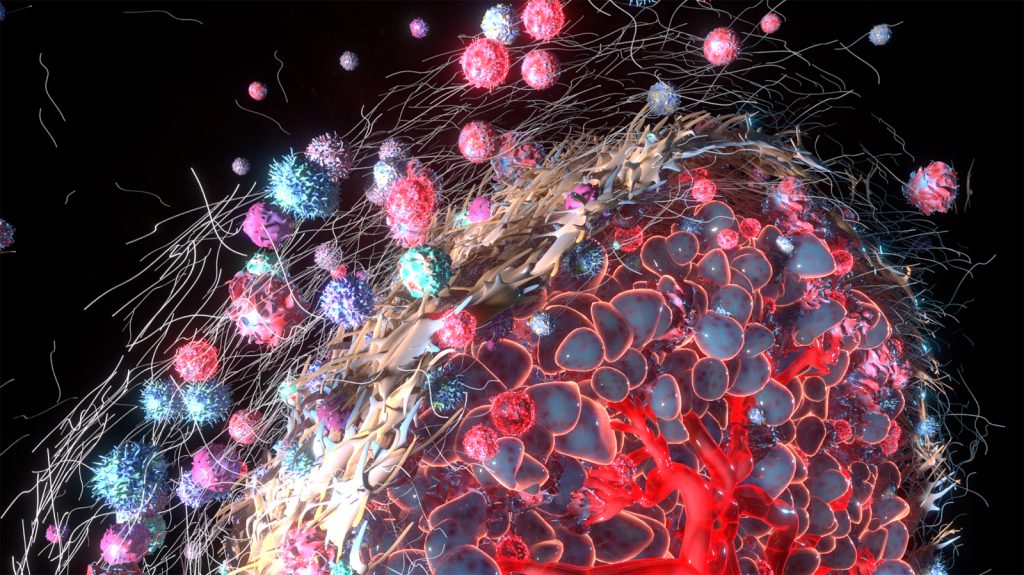
Bystander effect is usually considered as an undesired side effect of the ADC therapy, however, in some cases, it can have beneficial effects, for example when targeting tightly enclosed tumor microenvironment.
Recently, a novel ADC technology, dolaflexin, has been developed, in which the bystander effect can be tuned down by trapping the payload within the target cell. The cell-permeable payload, auristatin F-hydroxypropylamide, once inside the cell, undergoes metabolic conversion to a highly potent, but less cell-permeable auristatin F, which is attached to the ADC with a linker called fleximer. Such conversion causes the payload to behave like other constructs, which can’t passively cross the cell membrane, such as MMAF. Interestingly, the bystander effect can be harnessed to enhance therapeutic effect when treating tumors. The diffusing cytotoxic payload can spread throughout the tumor microenvironment, boosting efficacy in cases of intratumoral antigen heterogeneity. These include therapies with trastuzumab deruxtecan and trastuzumab duocarmazine, as well as other ADCs incorporating caspase-3-cleavable linkers. [2][3]
ChemPartner’s Cleave Twice Linker-Payload (C2LP) Platform for Developing Safer ADCs
All these technologies designed to reduce the premature release of the drug payload during circulation and to minimize off-target toxicities are not foolproof. For example, prodrug activation relies on tumor-specific triggers like hypoxia, low pH, or lysosomal enzymes, and these conditions can vary from cell to cell. This variability can lead to inefficient cleavage and reduced efficacy. In addition, hydrophobic prodrugs can cause ADC aggregation or trigger an immune response, and incomplete activation of the aggregates will diminish their potency. The tunable bystander effect can also be challenging, often affected by variability in the tumor microenvironment, making it difficult to precisely calibrate the extent of payload diffusion. This technology is also technically demanding, as it relies on sophisticated payloads with modifiable properties.[1][2]
Our proprietary Cleave Twice Linker-Payload (C2LP) Platform involves the use of tandem-cleavage linkers, where two sequential enzymatic cleavage events are required to release the payload. Our novel technology relies on two precisely engineered hydrophilic cleavable functional groups. This solution improves linker stability, lowers off-target toxicity from premature dissociation, prevents aggregation, and increases therapeutic window.
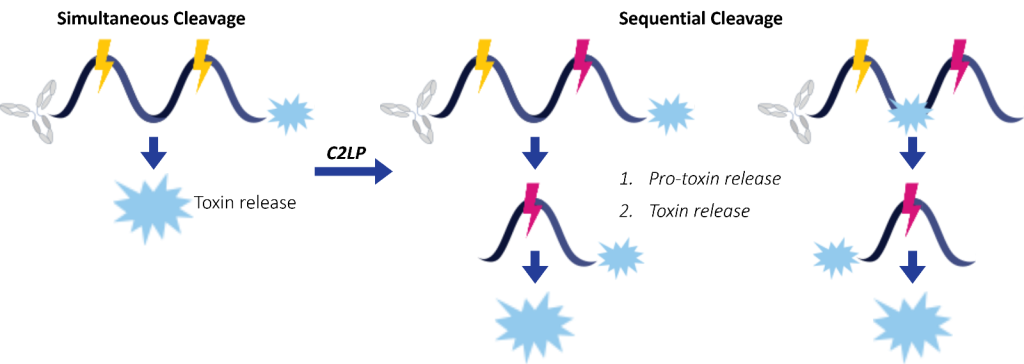
To test the concept, we have produced anti-HER2 ADC using our platform to test both in vitro and in vivo. We used a classical ADC as a reference and C2LP-equipped ADCs for the same target at different doses. We tested them in a bystander effect model using MDA-MB-468-Luc, a triple-negative breast cancer cell line and NCL-N87, a gastric adenocarcinoma cell line that overexpresses HER2. In our in vitro assay, we tested tumor volume change and reduced-complexity transfer function, modeling how these drugs are metabolized.
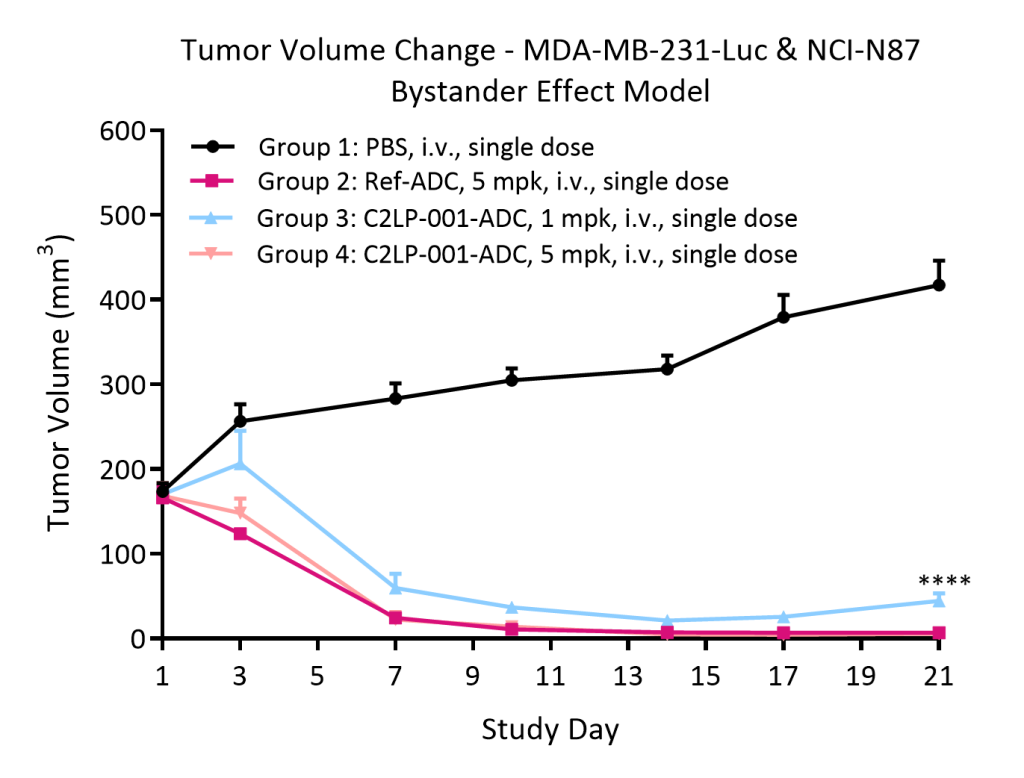
Tumor volume change and metabolism of cancer cells treated by ADC with C2LP linker compared to reference ADC
We have also used bioluminescence live imaging (BLI) to evaluate the bystander effect model.
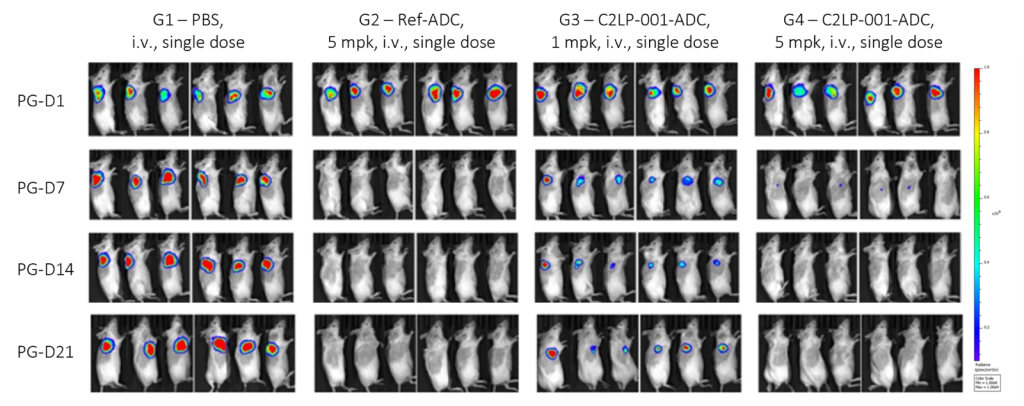
BLI imaging of bystander model with ADC with C2LP linker as compared to reference ADC
Our evaluation showed that C2LP-001-ADC significantly reduced tumor volume and BLI in the bystander-effect model. It is important to notice that body weight in the study was also maintained for 10 days longer than the reference ADC.

Animal body weight when treated with ADC with C2LP linker compared to a reference ADC
We have also investigated how C2LP ADC modulates toxic payload release in plasma by conducting PK/PD study in female NOG mice. We tested one reference ADC and two ADCs with toxin attached to them directly vs. the same toxin attached via C2LP linker. ADCs without the C2LP linker displayed an early toxin spike, whereas C2LP shows more moderate toxin release and better stability.
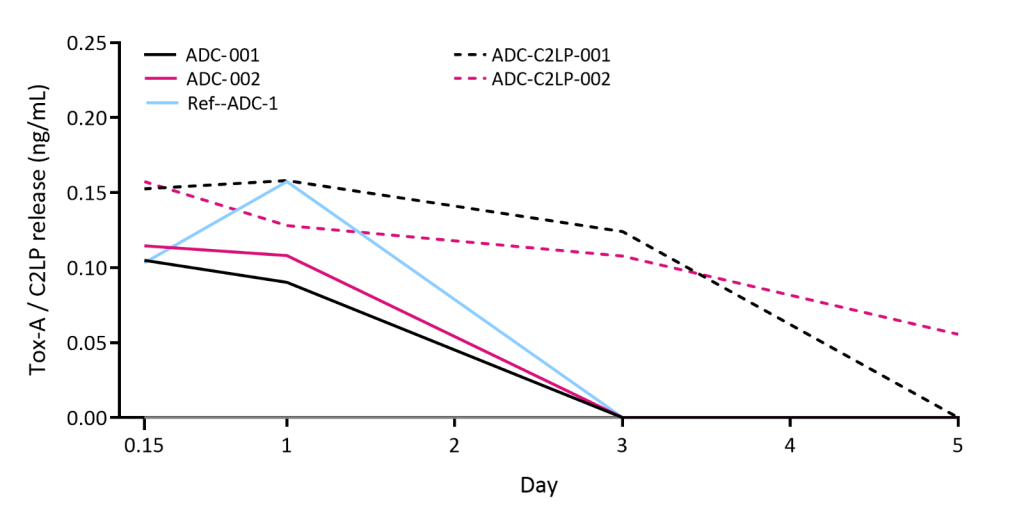
Toxin release from ADCs with C2LP linker compared to a reference antibody
Our C2LP technology shows superior in vivo efficacy when compared to reference ADC and greatly enhanced therapeutic index. C2LP significantly improves the safety profile of the ADC, showing delayed release and lower toxicity, ensuring better survival of the animals.
Pioneering Safer and More Effective ADCs Through Innovative Linker Design
At ChemPartner, we believe that progress in antibody-drug conjugates is not just about better molecules – it’s about better design thinking. Smarter linkers, like those used in our Cleave Twice Linker-Payload (C2LP) platform, represent the next leap forward in making ADCs both safer and more effective. By combining two decades of proven discovery expertise with adaptive collaboration, we’re redefining what precision drug delivery can look like. Our science is rigorous, our partnerships are personal, and our mission is shared: to push ADC innovation forward, together, and accelerate the arrival of life-changing therapies.
Bibliography
[1] Fong JY, Phuna Z, Chong DY, et al. Advancements in antibody-drug conjugates as cancer therapeutics. J Natl Cancer Cent. 2025;5(4):362-378. Published 2025 Apr 19. doi:10.1016/j.jncc.2025.01.007
[2] Guven H, Székely Z. Leveraging the Tumor Microenvironment as a Target for Cancer Therapeutics: A Review of Emerging Opportunities. Pharmaceutics. 2025;17(8):980. Published 2025 Jul 29. doi:10.3390/pharmaceutics17080980
[3] Yurkovetskiy AV, Bodyak ND, Yin M, et al. Dolaflexin: A Novel Antibody-Drug Conjugate Platform Featuring High Drug Loading and a Controlled Bystander Effect. Mol Cancer Ther. 2021;20(5):885-895. doi:10.1158/1535-7163.MCT-20-0166
