


Blogs & White Papers

One Antibody, Many Tasks: The Rise of Multi-Specific ADCs
Multispecific ADCs: Solutions to Oncology’s Toughest Hurdles
Antibody drug conjugates (ADCs) combine carefully engineered monoclonal antibodies with chemotherapy drugs, allowing for targeted therapeutic delivery to cancer cells. Targeting tumors with ADCs can mitigate systemic toxic effects, which are common with conventional chemotherapy, offering a wider therapeutic window. In the early 1900s, Paul Ehrlich proposed the concept of a “magic bullet” – a therapeutic agent capable of selectively targeting disease-causing cells while sparing healthy tissues. This idea later became associated with ADCs. However, translating the concept of these so-called magic bullets into effective cancer therapies has proven to be highly challenging in practice. The most common hurdles include poor internalization, limited payload efficacy, off-target toxicity or premature drug release, and drug resistance, limiting clinical efficacy.
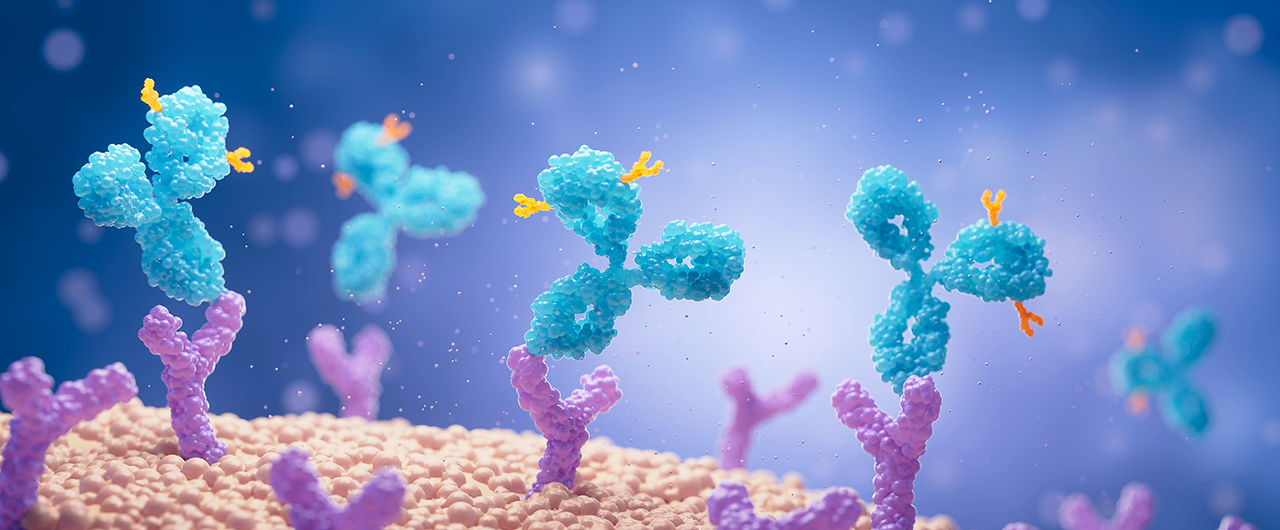
ADCs have mostly revolutionized oncology but have also been pursued as therapeutic biologics for autoimmune and neurodegenerative diseases. However, even the current, fourth-generation ADCs are not free from challenges in the clinic.
One actively investigated approach involves the development of multispecific ADCs, which may provide viable strategies to address these challenges. Biparatopic ADCs (BpADCs), for example, can bind to two distinct epitopes on the same protein, greatly enhancing target binding affinity, promoting receptor clustering on the cell surface, and driving more effective and rapid internalization. A bispecific ADC (BsADC) can target two different tumor-specific antigens, such as TROP2 and HER2, resulting in improved precision, the ability to overcome tumor heterogeneity, and address drug resistance. Off-target toxicity is minimized, as these two targets are rarely overexpressed in healthy cells simultaneously. BsADCs can also enhance the immune system by combining targeted drug delivery with immune system activation. For example, a BsADC can simultaneously target CD46 on a tumor cell and a protein activating immune cells, such as NKp30 on Natural Killer (NK) cells or CD3 on T cells. Recently, immune checkpoints have also been used as targets, such as the checkpoint ligand PD-L1, to prevent tumors from suppressing T-cell proliferation and evading the immune system. Furthermore, trispecific ADCs (TsADCs) are being investigated, which can target two cancer-associated antigens and one T-cell/NK engager or checkpoint protein.[1][2]
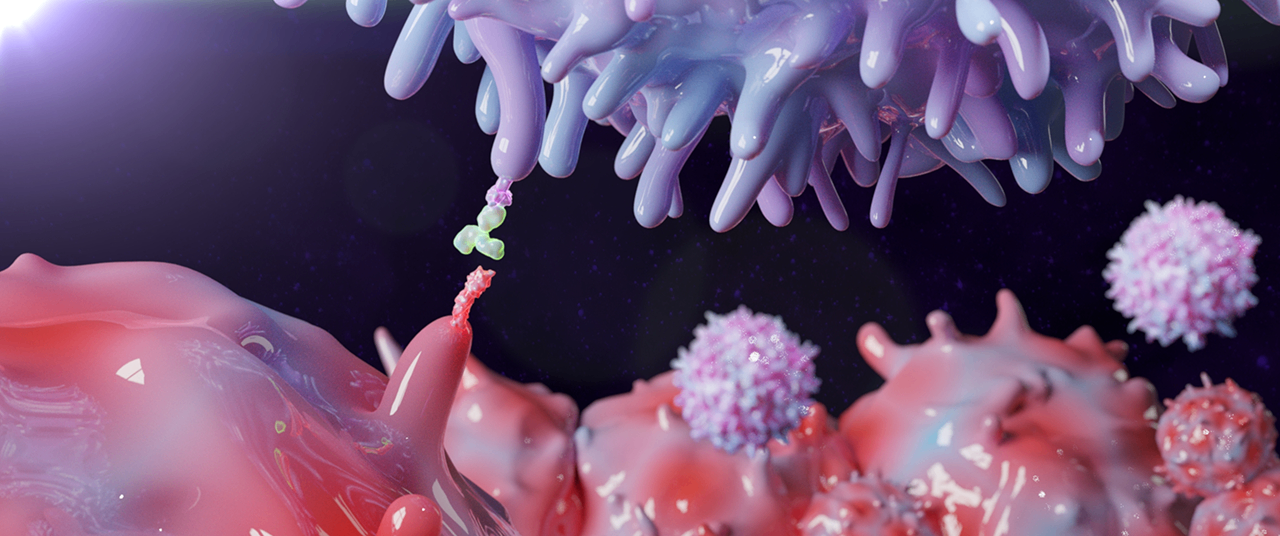
Bispecific antibodies can target antigens on both cancer cells and engage T-cells to boost immune response. Additionally, they can carry cytotoxic, agonist, degrader or immunomodulating payload.
Multispecific ADC Engineering: 1 + 1 Doesn’t Always Equal 2
Engineering a BsADC is not simply using two separate paratopes that correspond to monospecific ADCs used in combination therapy. Multispecific ADCs will have unique dual binding affinities and most likely profoundly distinct pharmacokinetic (PK) and pharmacodynamic (PD) properties. Thus, careful regulation of affinity ratio is necessary to enable either simultaneous or sequential binding, whichever is preferred. Similarly, the drug-to-antibody ratio (DAR), typically ranging from 2-4, must retain balance between the benefits of potency with the risks of rapid clearance and toxicity. DAR is usually highly dependent on payload toxicity and efficacy, for non-toxin payloads such as PROTACs or topoisomerase inhibitors, a higher DAR is required to achieve a therapeutic effect, but not so high as to cause ADC aggregation. Recent advancements in ADCs have led to the development of dual-payload modalities, which necessitate precise control of the drug-to-antibody ratio (DAR) and consistent balance between two distinct cytotoxic payloads. Dual-payload ADCs represent promising strategy to overcome cancer drug resistance by simultaneously targeting multiple cellular pathways.[3]
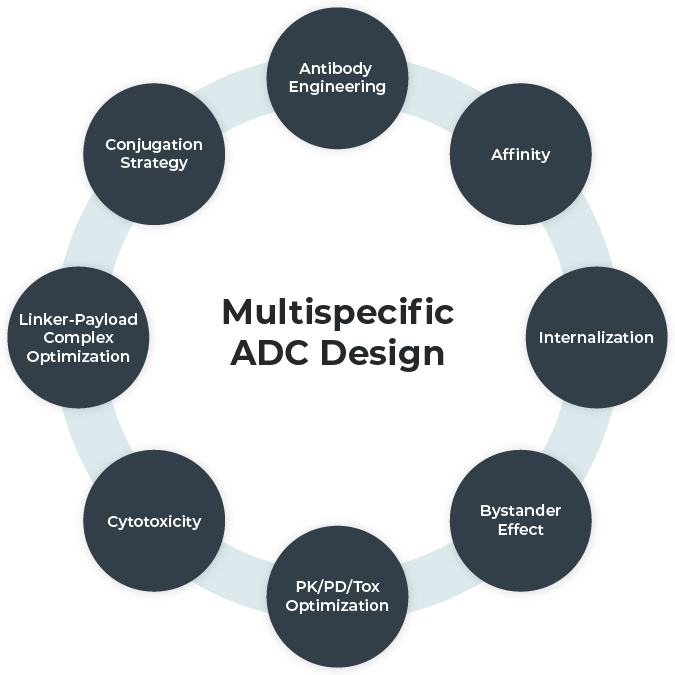
Multispecific ADC design requires holistic approach of interconnected technologies to create an effective and safe therapeutic drug.
ChemPartner : Comprehensive Screening Platform for Multispecific Modalities
We are a preclinical CRO with expertise across all molecular modalities, leveraging our scale and flexible partnership model to work with visionary life science companies, helping them efficiently and rapidly bring scalable, life-changing drugs to market. Our integrated ADC development platform spans antibody discovery, linker-payload chemistry, protein engineering, bioconjugation, and comprehensive in vitro and in vivo characterization. We have generated a diverse portfolio of ADCs, including monospecific, bispecific, biparatopic, and tri-specific formats, with both single and dual-payload conjugates.
Bispecific ADCs
Our bsADC platform has been validated using anti-HER2 and TROP2 bsADC with a vcMMAE payload, which demonstrated rapid internalization and potent tumor cell killing, with sub-nanomolar IC50 values in cell lines expressing high TROP2 and medium/low HER2. Xenograft studies further confirmed superior antitumor efficacy compared to monotherapy ADCs targeting either antigen alone. Click here to read more about it on our blog post.
Trispecific ADCs
We have engineered and validated a tri-specific antibody against HER2 x TROP2 x PD-L1, which demonstrated superior binding and internalization compared to its monospecific and bispecific precursors. When conjugated to a cytotoxic payload, the tsADC exhibited great potency, suggesting synergistic engagement of multiple targets can significantly improve therapeutic outcomes and reduce the likelihood of tumor escape mechanisms.
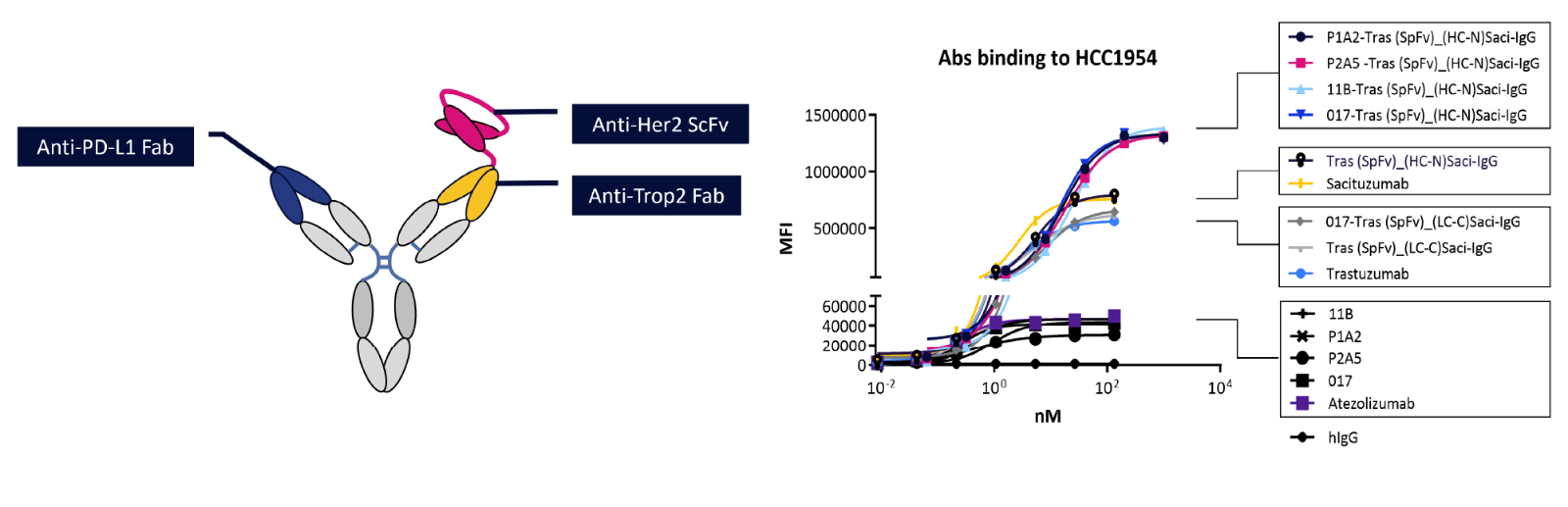
HER2×TROP2xPD-L1 trispecific ADC structure and binding to HCC1954, an epithelial breast cancer cell line. The ADC demonstrated a stronger binding when compared to the parental monoclonal & monospecific antibodies (mAbs).
Biparatopic ADCs
Using anti-PD-L1 monoclonal antibodies with co-binding capabilities, we assembled bispecific antibodies that were further developed into potent bpADCs. This design not only improves cellular uptake but also enhances cytotoxic effects by combining direct tumor cell killing with immune modulation.
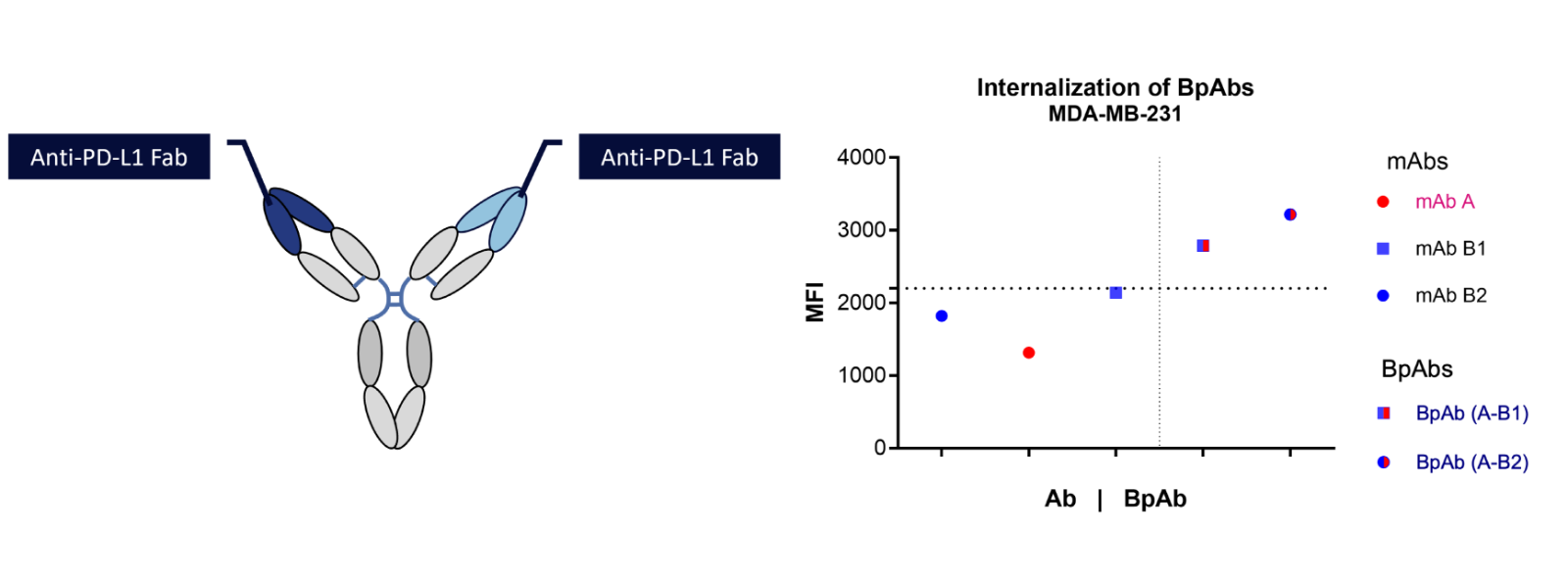
Biparatopic ADC structure and internalization in MDA-MB-231, breast cancer cell line. BpADCs showed better internalization compared to the parental mAbs.
Dual Payload ADCs
We have developed robust technologies to generate dual-payload ADCs with various payload combinations at consistent and controlled ratios, enabling enhanced therapeutic response and broader applicability across resistant tumor types.
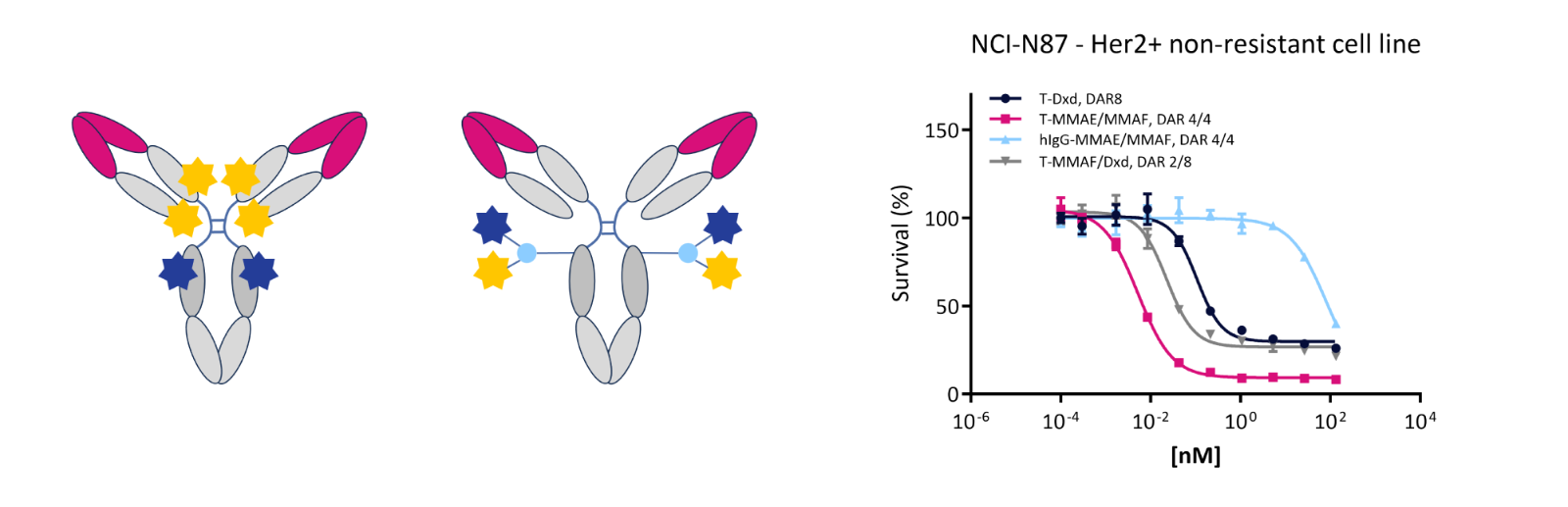
We can engineer multiple configurations of dual payload ADCs, either multi- or single site, branched linker. We validated multiple configurations on cytotoxic assays, testing different DARs.
Advancing Multispecific ADC Through Proven Science and Adaptive Collaboration
Multispecific ADCs represent a new exciting frontier in targeted oncology, demanding precise engineering of novel modalities, robust pharmacology, and seamless integration of diverse technologies. We apply two decades of expertise to accelerate this evolution – from antibody design and conjugation chemistry to in-depth PK/PD and in vivo validation. Our adaptive, end-to-end multispecific ADC platforms enable optimization of advanced biologics to overcome resistance and improve therapeutic index. Through proven science and collaborative effort, ChemPartner continues to help customers translate molecular complexity into clinical potential.
Bibliography
[1] Allen, C.; Zeidan, A.M.; Bewersdorf, J.P. BiTEs, DARTS, BiKEs and TriKEs—Are Antibody based Therapies Changing the Future Treatment of AML? Life 2021, 11, 465. https://doi.org/10.3390/life11060465
[2] Dong Y, Zhang Z, Luan S, et al. Novel bispecific antibody-drug conjugate targeting PD-L1 and B7-H3 enhances antitumor efficacy and promotes immune-mediated antitumor responses. Journal for ImmunoTherapy of Cancer 2024;12:e009710. doi:10.1136/jitc-2024-009710
[3] Gu Y, Wang Z, Wang Y. Bispecific antibody drug conjugates: Making 1+1>2. Acta Pharm Sin B. 2024;14(5):1965-1986. doi:10.1016/j.apsb.2024.01.009